As seen in 
As seen in
It is 3 PM on a Tuesday, and you're staring at your laptop screen. The words start to blur, and your brain feels like it has been stuffed with cotton wool. This is the famous afternoon slump.
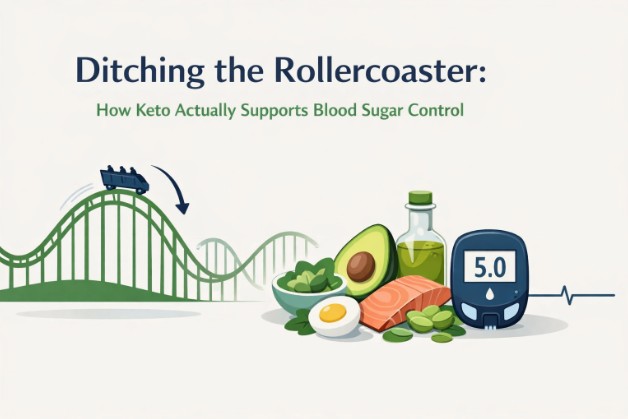
Most people reach for a biscuit or a sugary coffee to fix it. You tell yourself you just need a little boost. In reality, you are just feeding the rollercoaster.
That sudden drop in energy is not a lack of willpower. It is a direct result of how your body processes carbohydrates. If you are a busy professional, or someone managing a condition like diabetes, this cycle is exhausting.
There is a way to step off the ride. Low carb living is not just about weight, it is about finding a level of stability that most people have forgotten is possible.
To understand why you feel tired, you have to look at your blood sugar. When you eat carbohydrates, your body breaks them down into glucose, and that glucose enters your bloodstream. Your pancreas then releases insulin, which is like a key that opens the doors to your cells so they can use glucose for energy.
When you eat a high-carb meal, your blood sugar spikes. Your body responds with a big surge of insulin to clear it, and this often works too well. Your blood sugar levels crash back down, your brain signals that it needs more fuel, and you feel shaky, irritable, and hungry.
This is the rollercoaster. You spend your day bouncing between sugar highs and energy lows. For many people, this leads to long-term issues with insulin sensitivity, where your body starts to ignore the insulin "key". This is how many people end up searching for keto for diabetics UK.
By reducing the amount of glucose entering your system, you stop the spikes. No spikes mean no crashes.

Walking down the health aisle of a supermarket can be confusing. You see labels like "No Added Sugar" or "Diabetic Friendly". Unfortunately, these are often marketing traps.
Many products replace sugar with ingredients that still impact your blood sugar. Maltitol is a common sugar alcohol used in cheap "low carb" snacks, and it has a high glycaemic index. This means it can still cause a significant insulin response, sometimes close to what you would get from table sugar.
Then there are hidden starches. Manufacturers often use rice flour, potato starch, or maltodextrin to improve texture. These ingredients are processed very quickly by your body. They might be gluten-free, but they are definitely not keto-friendly.
Even some "healthy" snack bars contain more carbohydrates than a standard chocolate bar. They just hide it behind clever packaging and buzzwords. We see this often with large-scale keto recipe boxes that use fillers to keep costs down. The range of snacks we stock are all low in carbs and keto friendly.
True blood sugar control requires transparency. It requires real food, not chemical substitutes.

The goal of a ketogenic diet is to switch your primary fuel source. Instead of burning glucose, your body begins to burn fat. This metabolic state is called ketosis. In simple terms: you are turning your body into a fat-burning machine.
When you are in ketosis, your blood sugar levels often stay within a narrower, healthier range. Research shows this can have a real effect on health markers. A 2021 review found that people with diabetes saw improvements in their HbA1c tests in as little as three weeks. HbA1c is a measure of your average blood sugar over several months, and lowering it is the "holy grail" for many managing their health.
Beyond the medical stats, the day-to-day benefits matter most. You can wake up feeling more alert. You can get through an afternoon without needing a snack and a pep talk. This is what stable energy feels like.
You are no longer a slave to the next meal. Your body can tap into its own fat stores whenever it needs fuel. This is why so many people look for the best keto meal delivery services UK. They want the benefits of ketosis without the stress of constant label-reading.

Knowing what to eat is one thing. Actually doing it every day is another. Life gets in the way. You work late, the kids need picking up, or you are just tired, and suddenly the bread bin starts looking like a good idea.
Consistency is the only way to keep your blood sugar stable. If you eat keto for three days and then have a high-carb binge, you are back on the rollercoaster. That is why we started Keto Kitchen Lytham.
We are a family-run business based in Lancashire. We believe that eating well should be the easiest part of your day. Our ready made keto meals UK are freshly cooked by professional chefs, with every portion carefully controlled. We ensure every meal contains under 20g of carbohydrates.
We do not use subscriptions because we believe in flexibility. You order what you want, when you want it, whether you need a full week of food or just a few emergency meals for busy nights. We offer nationwide delivery across the UK, and your meals arrive freshly cooked and ready to heat.
This removes the guesswork and the "decision fatigue" that leads to bad choices.

We focus on quality because your body knows the difference. Our meals are entirely gluten-free, and we do not use cheap vegetable oils or hidden fillers. When you eat our keto lasagne, you are eating real ingredients. When you try our moussaka, you are getting nutrition, not chemicals.
This focus on real food is essential for long-term health. It is not just about the numbers on a packet, it is about how that food makes you feel two hours later. Many people find that their cravings naturally disappear when they stop eating processed sugars.
Your taste buds actually change. A piece of 90% dark chocolate or one of our keto brownies becomes a genuine treat, not a "cheat day" event. You stop needing the hit of high-fructose corn syrup. This is the ultimate freedom from the food industry's grip.
Sweet cravings do not disappear overnight, and that is normal. The trick is choosing treats that do not send your blood sugar shooting up.
That is why we also make low carb cakes UK customers can actually fit into a blood-sugar-friendly routine. They are also gluten free cakes, made with the same focus on real ingredients. Many people find this helps because you can have something sweet, without the usual spike and crash that follows standard cakes and biscuits.

Blood sugar control does not have to be a battle. It does not have to involve complex maths or starving yourself. It is about choosing the right fuel, more often than not, and making it easier to do that on a normal Tuesday.
By lowering your carbohydrate intake, you allow your body to heal. You give your pancreas a rest, and you give your brain the steady stream of energy it craves. Whether you are looking for low carb meal delivery UK to support a health goal or just to feel better at work, we are here to help.
The rollercoaster is optional. You can choose to step off whenever you are ready. Take a look at our current menu and see how easy it can be.
No more slumps. No more crashes. Just good, freshly cooked food that works with your body, not against it.
If you want to learn more about the lifestyle, you can read about the founding of Keto Kitchen or check out our guide on living low carb. The first step is often the hardest. We make the rest of the steps delicious.