As seen in 
As seen in
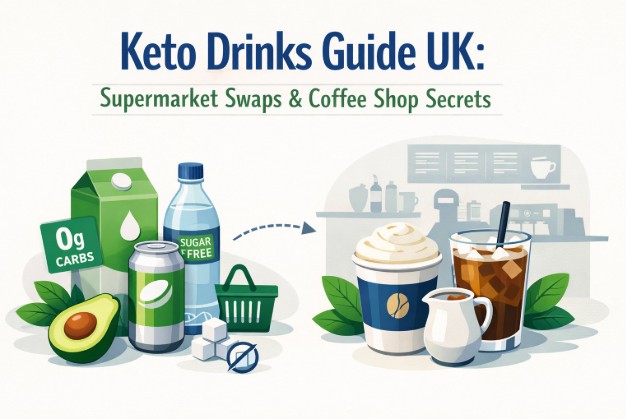
Staying in ketosis while living a normal life often feels like a balancing act. You have your meals sorted, but then you find yourself thirsty in the middle of a shopping trip or meeting a friend for a brew. In the UK, the drink aisles and coffee menus are packed with hidden sugars that can stall your progress in a single sitting.
The goal is to find drinks that keep your insulin levels stable without making you feel restricted. Whether you are browsing the shelves at Tesco or standing in the queue at Costa, knowing exactly what to order makes the keto lifestyle much more sustainable.
This guide focuses on the practical side of low-carb living. We will look at what to grab from the supermarket, how to navigate the big coffee chains, and why certain "healthy" options are actually your biggest hurdle.
Walking into a large supermarket like Sainsbury's or Asda can be overwhelming. There are rows upon rows of colourful bottles claiming to be "natural" or "healthy." For anyone on a keto diet, these labels can be misleading.
Most of the major soda brands have recognised the demand for sugar-free options. In the UK, we are lucky to have a wide variety of "Zero" drinks. These typically use artificial sweeteners that do not impact blood sugar for most people.
While these are safe from a carbohydrate perspective, some people prefer to avoid artificial sweeteners like aspartame. If that sounds like you, there are more natural options appearing on the shelves.
In the last few years, the UK market has seen a surge in premium sparkling waters that use better sweeteners or no sweeteners at all. These are often found in the "Healthy Living" or premium soft drink sections.
These drinks provide that fizzy "hit" without the chemical aftertaste some people associate with traditional diet sodas.

This is where many people fall down. We have been told for years that fruit juice is healthy. In reality, a glass of orange juice can contain over 20g of carbs. That is your entire daily allowance in one drink.
Smoothies are even worse. Even the "green" ones often contain apple juice or banana as a base to make them palatable. These are essentially sugar bombs. Even if the sugar is "natural" from fruit, your body still treats it as sugar, which will kick you out of ketosis.
Always turn the bottle around. Do not trust the front of the pack. Look for the "Carbohydrates" line in the nutritional table.
In the UK, the "of which sugars" part is helpful, but the total carbohydrate number is what matters most. Some drinks might say "no added sugar" but still be high in carbs because of the fruit content. If the bottle shows more than 1g or 2g of carbs per 100ml, it is best to put it back.
Coffee shops like Costa, Starbucks, and Pret A Manger are everywhere. They can be a keto minefield, but they also offer some of the best low-carb options if you know what to ask for.
The simplest orders are usually the best. If you stick to the basics, you rarely have to worry about your carb intake.
This is the most important part of your coffee order. The "milk alternative" craze has introduced a lot of options that are terrible for keto.
Avoid Oat and Rice Milk. Many people think oat milk is a healthy choice, but oats are a grain. One latte made with oat milk can contain 15g to 20g of carbs. It is essentially liquid bread. Rice milk is similarly high in starch and sugar.
Choose Unsweetened Almond Milk. Most coffee shops now carry unsweetened almond milk. It is much lower in carbs than cow’s milk or oat milk.
The Gold Standard: Double Cream. If you want a truly keto coffee, ask for an Americano with a splash of double cream. Double cream is high in fat and very low in carbs. It makes the coffee incredibly rich and satisfying, helping you stay full until your next meal.
Standard coffee syrups are pure sugar. A "pump" of vanilla or caramel can add 5g to 10g of carbs. Most large chains now offer Sugar-Free Vanilla or Sugar-Free Caramel syrups.
These are fine in moderation. However, be aware that "Sugar-Free" does not always mean "Carb-Free" in large quantities, so stick to one pump if you can.
Tea is naturally keto-friendly. Whether you prefer English Breakfast, Earl Grey, or Green Tea, you are safe as long as you watch what you add to it.

We know that managing every single gram of carbohydrates can be exhausting. That is why we do the hard work for you. At Keto Kitchen Lytham, we specialise in made to order meal plans that are freshly made and delivered across the UK.
Our meals are designed to be the perfect companion to your healthy lifestyle. When you have a delicious, low-carb dinner waiting for you at home, you are much less likely to grab a sugary snack or drink when you are out. We focus on real food, quality fats, and keeping carbohydrates under 20g per day.
If you are looking for something to satisfy a sweet tooth without the sugar crash, our keto cakes are the perfect partner for your morning coffee.
Living a low-carb life in the UK doesn't mean you have to stay at home. With a little bit of knowledge, you can enjoy the convenience of supermarkets and the social aspect of coffee shops without ever falling out of ketosis.
No, oat milk is generally high in carbohydrates because it is made from grains. A single serving can contain 15g to 20g of carbs, which is often enough to kick you out of ketosis.
Unsweetened almond milk is the best dairy alternative. However, for a truly keto option, ask for an Americano with a splash of double cream, which is very low in carbs and high in healthy fats.
Yes, diet sodas and 'Zero' versions of popular drinks contain zero carbohydrates and are generally considered safe for a keto lifestyle.